
In the audience
A concert programme is a map, not homework
Before the lights settle, a few details in the programme can help you find your way through an orchestral concert. Start with the order, the performers and the movements.

A JOURNAL FOR CURIOUS EARS
Find a place in the audience. Follow a sound. Let one good question take you further into the music.
Pull up a seat ↗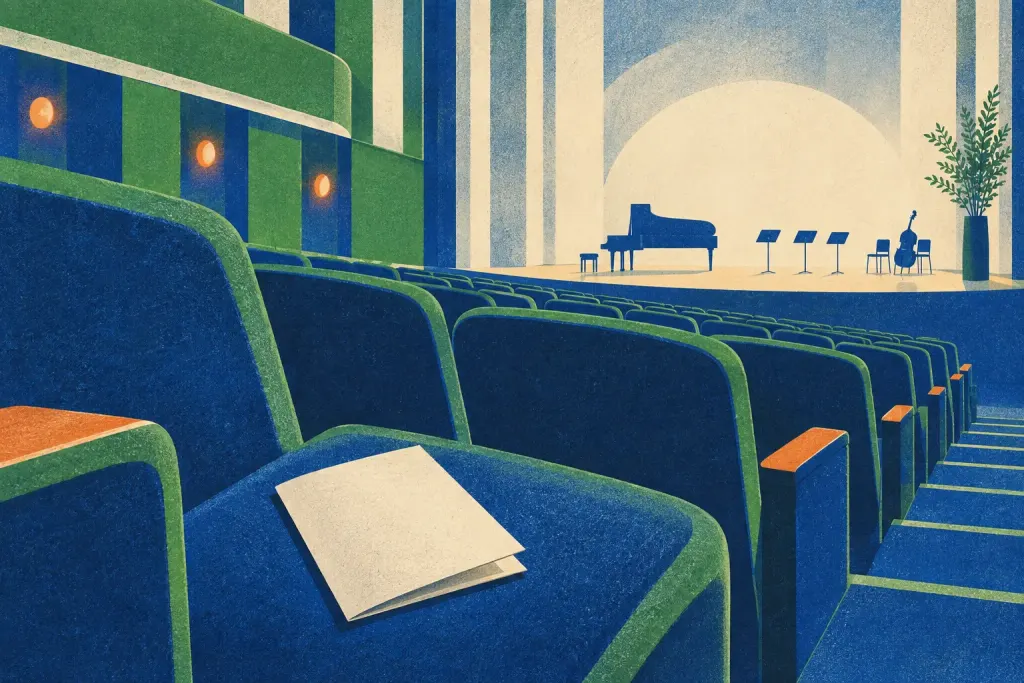
Before the lights settle, a few details in the programme can help you find your way through an orchestral concert. Start with the order, the performers and the movements.
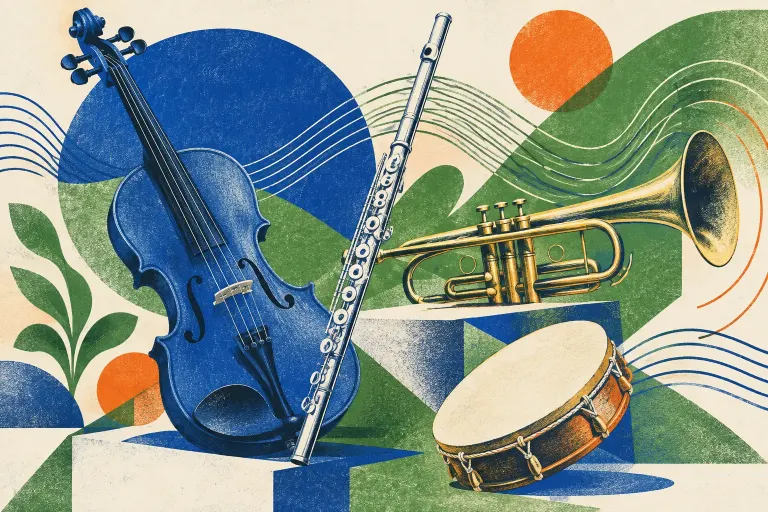
Strings, woodwinds, brass and percussion offer a starting point for hearing an orchestra. Listen for one sound at a time, and leave room for the details you cannot yet identify.

A beat can mean the pulse you follow or a drum pattern someone has made. Separate those uses, then explore what tempo tells you—and what it leaves out.
At a small-ensemble concert, follow how musical ideas pass between players rather than trying to identify every note.
A melody can remain recognisable as its instrumental colour changes. Compare two appearances and hear what stays stable.
Follow changes in direction, density and expectation to hear activity in music that moves at an unhurried pace.
AI-created editorial illustrations. The scenes do not document real concerts or venues.